Jun-26-2026
For architects, contractors and importers sourcing windows for residential, hotel or commercial projects, thermal break aluminum casement windows have become a default specification in mid- to high-end builds across North America, Oceania and Africa. They deliver clean sightlines, generous daylight areas, and—when specified correctly—strong thermal and acoustic performance.
But "thermal break aluminum casement" can mean very different things depending on who you buy from. Below are the seven specs that actually matter when comparing offers.
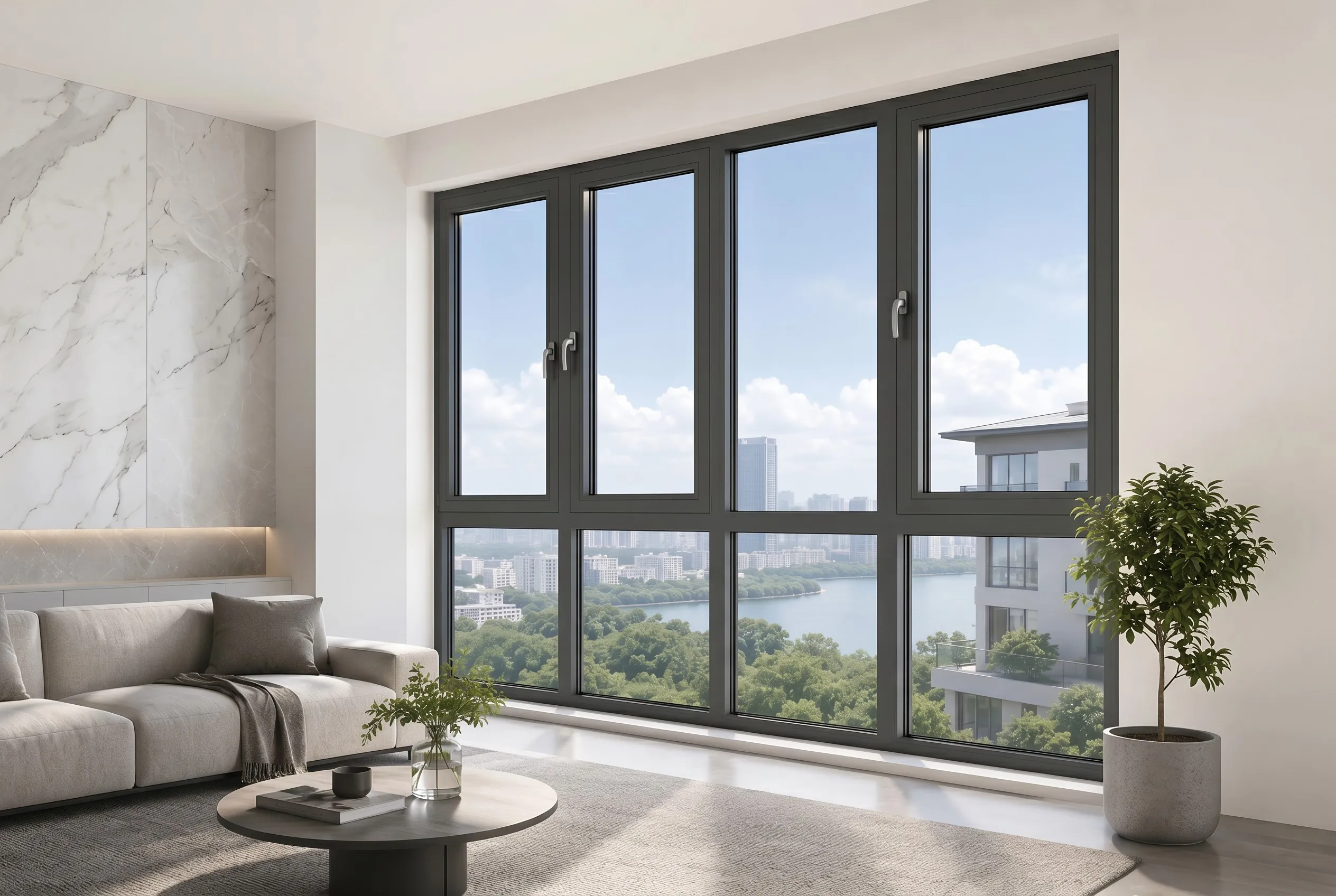
Two alloys dominate architectural windows: 6063-T5 and 6063-T6. T5 is the everyday workhorse for residential casements and fixed lites; T6 has higher tensile strength and is typically reserved for large sashes, load-bearing transoms, or sections that need to span longer openings without intermediate support.
A serious supplier will let you specify either, or mix them within the same window system depending on which part of the frame is doing the work. There is no need to insist on "T6 everywhere"—it costs more and provides no benefit on small or medium openings.
Wall thickness is the second lever:
1.4 mm: minimum for residential casements in mild climates
1.6–1.8 mm: recommended for hotel, multi-family and commercial work
2.0 mm and up: coastal, high-wind, or oversized openings
Always ask for the profile drawing. If the supplier cannot send one, the spec conversation is over.
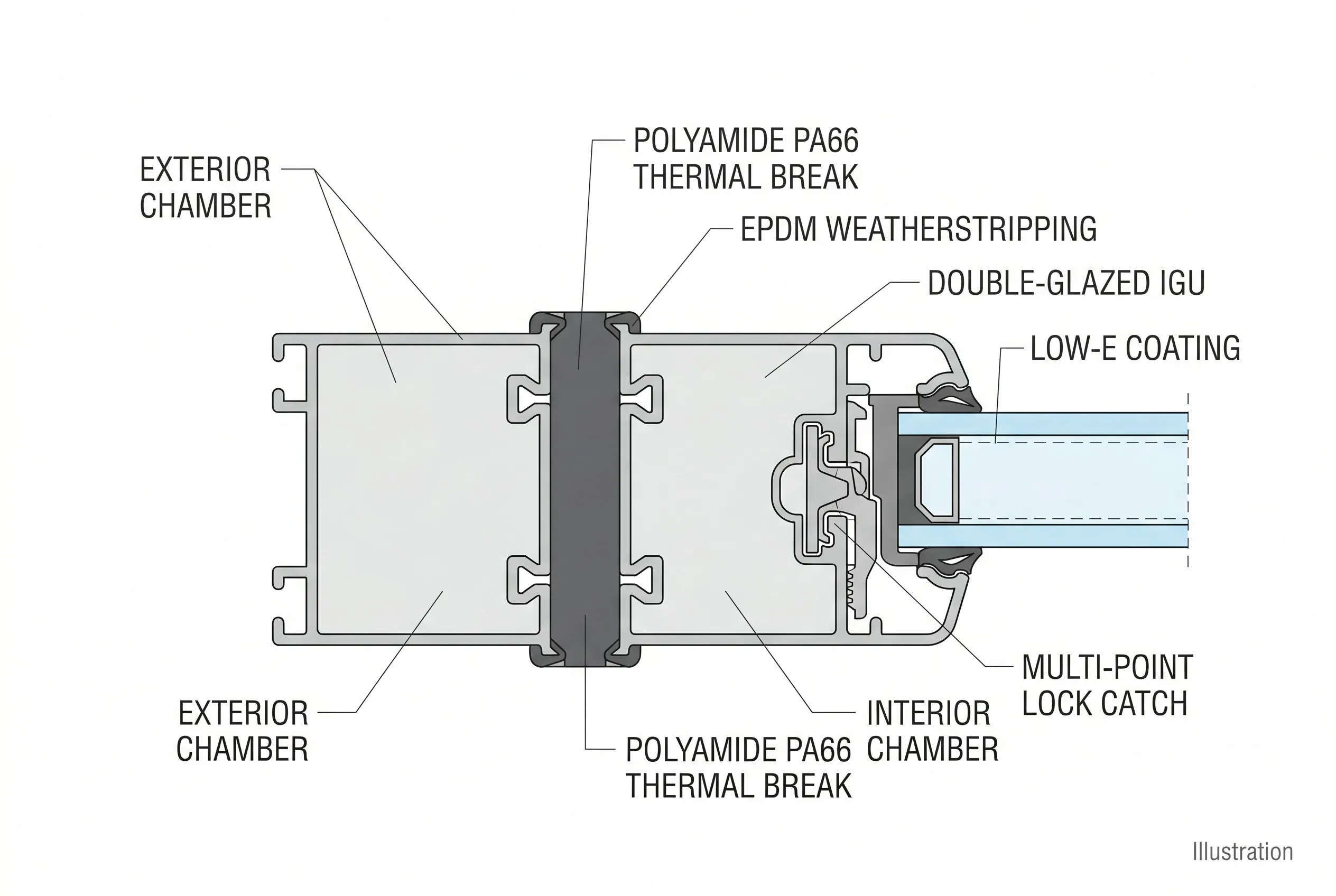
The thermal break is the polyamide strip that mechanically separates the inside and outside aluminum. It is the single most important component for thermal performance.
Look for:
Polyamide PA66 GF25 (25% glass-fibre reinforced) thermal breaks, not unfilled plastic
A strip width matched to your climate—typically 24 mm or more for cold zones, 14–20 mm for mild zones
Continuous, factory-rolled assembly, with the aluminum mechanically crimped onto the polyamide
Ask the supplier to point out the thermal break on a profile cross-section drawing. The bar should be visibly continuous from one chamber to the other.
Glazing is where most of the measurable energy performance lives.
| Climate / Use | Typical Glazing |
|---|---|
| Mild residential | 5 mm + 12A + 5 mm clear double-glazed |
| Cold or hot climates | Double-glazed with a Low-E coating, argon-filled |
| Coastal / hurricane zones | Tempered laminated outer pane + Low-E inner pane |
| Premium villa or hotel | Triple-glazed, two Low-E layers, argon-filled |
A correctly specified double-glazed Low-E insulating glass unit can typically deliver a U-value in the single-digit range expected by NFRC, AAMA and EN 14351-1 energy classes used in most national codes. Triple glazing pushes performance further but adds weight and cost.
Always request the IGU specification sheet so you know exactly which Low-E product, spacer bar, gas fill and total thickness are quoted.
The hinge, handle and lock are what the end user touches every day. For casement windows:
Multi-point locking with at least three engagement points, for security and consistent seal compression
Stainless steel friction stays—not zinc-plated—if the project is anywhere near salt air
European-style cam handles (or equivalent quality) with a tested cycle life
An optional tilt-turn mechanism if the room needs secure ventilation; this adds a second opening mode without changing the visible frame

A tilt-turn window is worth specifying when the same opening needs to handle both daily cleaning (turn mode) and secure overnight ventilation (tilt mode).
Even the best profile leaks if the gaskets are wrong. Demand:
EPDM weatherstripping in two or three contact lines—not PVC, which hardens and shrinks
Drainage slots routed through the outer frame to evacuate condensation
A documented air infiltration class to a recognised standard, such as EN 12207 in Europe or the corresponding AAMA 101 / I.S. 2 / A440 performance class in North America
For wind-driven rain regions, confirm whether the system has been tested by an accredited laboratory and ask for the test report.
Certifications protect you in two ways: they prove performance, and they unblock customs or building-permit approval in the destination market. The ones worth verifying:
NFRC 500—U.S. and Canada energy performance ratings
AAMA 101 / I.S. 2 / A440—North American window performance class
CE EN 14351-1—mandatory for the EU market
EPR registration—required in Germany and France for packaging compliance
If a supplier "claims" certifications, ask for the certificate number and the issuing body. Real certifications are searchable in public databases.
Mid- and large-scale projects almost always need:
Custom sizes to the millimetre
RAL- or PMS-matched powder coating, or fluorocarbon (PVDF) coating for coastal projects
Mullions, transoms, fixed and tilt-turn units combined into a single assembly
Pre-assembled IGU + frame, packed by opening number for fast on-site install
CAD shop drawings and installation instructions in English
A factory that can deliver shop drawings and packing-list-by-opening is doing this for export projects every week. A factory that cannot is still doing domestic retail.
At Frame (TIANJIN FRAME METAL MANUFACTURING) we manufacture thermal break aluminum casement windows for projects across North America, Oceania and Africa. Every system we ship is built around the seven points above:
6063-T5 or T6 profiles, wall thickness configurable per project
PA66 GF25 polyamide thermal break, factory-rolled and continuous
Double or triple Low-E insulating glass units, argon-filled, with full IGU specification provided
Multi-point locking with stainless-steel friction stays; tilt-turn option available
EPDM triple-seal weatherstripping with documented drainage paths
NFRC 500, AAMA 101, CE and EPR certifications in place
Custom sizes, custom colours, CAD shop drawings as standard service
Overseas on-site installation support available for qualifying projects
If you have a project on the table—villa, hotel, mid-rise, or commercial—send us the elevations and opening schedule. We will reply with a fully specified offer within one business day.
For specifications, pricing, or our full product catalogue (PDF), please email our sales team directly. We reply within one business day with project-specific drawings and a complete quotation.
| Sales Contact | WhatsApp / Phone | |
|---|---|---|
| Gloria | gloria@alloyframemaster.com | +86 152 2227 1818 |
| Lyra | lyra@alloyframemaster.com | +86 155 1095 9890 |
To request the full PDF catalogue, simply send an email titled "Catalogue Request" with your country and project type.